
Banking insights for a connected worldIndependent financial education
The knowledge library

Articles

Clear, practical explanations of banking and finance.

Global Banking Money Flow

What Is Correspondent Banking and How Does It Work?

Correspondent banking is an arrangement in which one bank provides financial services to another bank, often across international borders. It enables international transfers, foreign currency transactions and trade-related banking services. Nostro and vostro accounts help…
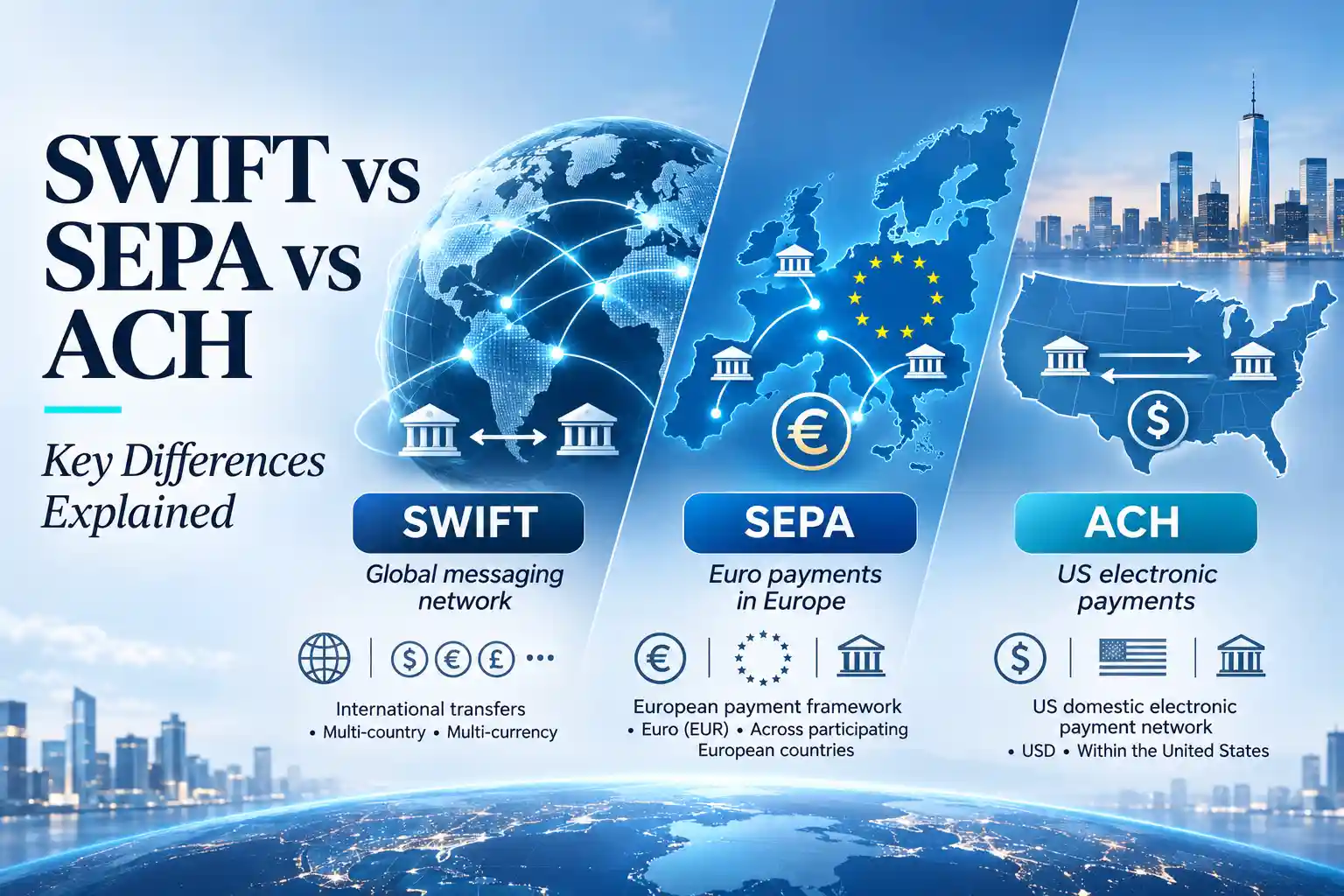

SWIFT, SEPA, and ACH Compared

SWIFT vs SEPA vs ACH: Key Differences Explained (2026 Guide)

SWIFT: A global financial messaging network that allows banks to exchange secure payment instructions, particularly for international transfers. SEPA: A standardized framework for euro payments across participating European countries. ACH: A US electronic payment network used…

How Banks Make Money_ Global Finance Explained

How Do Banks Make Money? 7 Revenue Sources Explained

Interest income: Banks earn interest from loans, debt securities, and other interest-bearing assets. Net interest income: The difference between interest earned and interest paid on deposits and other funding. Banking fees: Account services, loan processing, payment services,…

When a Bank Fails_ Protection and Stability

What Happens When a Bank Fails? Your Money, Deposits and Loans Explained

Bank failure: Occurs when a bank can no longer operate safely or meet its financial obligations, leading to regulatory intervention, resolution or closure. Depositor protection: Many countries insure eligible bank deposits up to specified limits. Access to money: Insured…

Basel III_ Capital, Liquidity & Risk

Basel III Explained: Capital, Liquidity and Banking Risk

Basel III is an international banking regulatory framework developed by the Basel Committee on Banking Supervision (BCBS). Capital adequacy: Banks must maintain regulatory capital to absorb financial losses. Minimum capital ratios: Basel standards require CET1 capital of at…

Secure Global Banking Network

IBAN vs SWIFT Code: What's the Difference? A Complete International Guide

IBAN (International Bank Account Number): A standardized identifier for a specific bank account. SWIFT/BIC code: An internationally standardized code identifying a bank or other business party. Main difference: IBAN identifies the account; SWIFT/BIC identifies the…

What Is a Neobank

What Is a Neobank? Benefits, Risks and Limitations

Quick Summary Neobank: A digital-first financial services provider that offers banking-like services mainly through mobile apps and websites. Operating models: Some neobanks are fully licensed banks; others use partner banks or electronic money licences. Benefits: Convenient…

 APR and APY

APR vs APY: How Interest Rates Really Work — A Global Guide

Quick Summary APR (Annual Percentage Rate): Measures the annualized cost of borrowing, including interest and certain applicable fees. APY (Annual Percentage Yield): Measures the annualized interest earned on savings or deposit products, including compounding. Main…